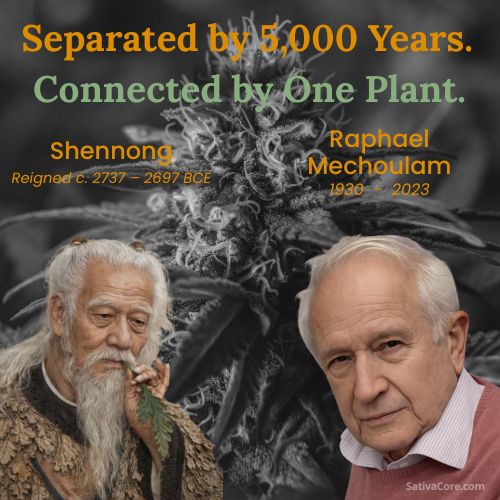
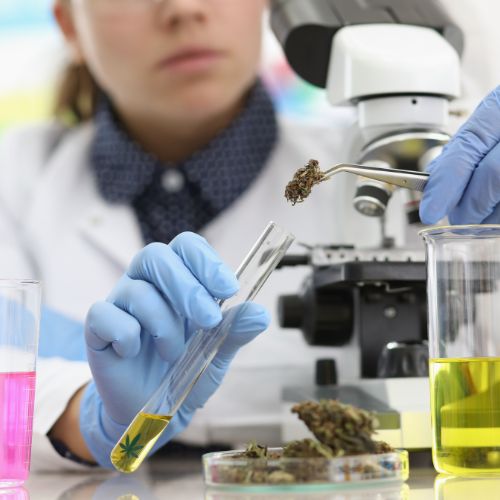
The use of cannabis for wellness purposes has accompanied humanity for millennia. Historical records date back to 2700 BCE, when the Chinese Emperor Shennong described the plant as an ally in addressing various discomforts. However, the scientific explanation for this relationship only began to emerge consistently in the 20th century.
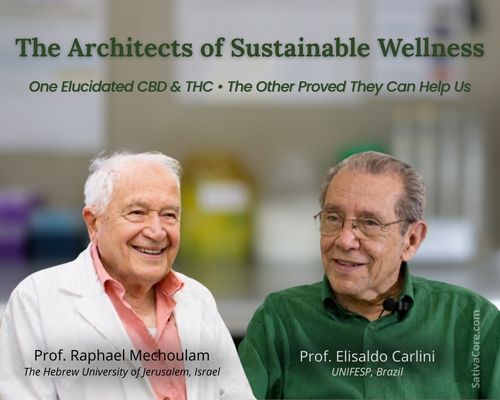
The major turning point occurred with the research of scientist Raphael Mechoulam, who in 1964 isolated the first phytocannabinoids and, in the following decades, helped reveal something even more profound: the human body itself produces similar compounds—endocannabinoids.
The human body operates in a continuous state of adjustment to preserve its internal balance — a process known as homeostasis. To sustain this balance, the body itself produces molecules known as endocannabinoids — primarily anandamide (AEA) and 2-arachidonoylglycerol (2-AG). In other words, even as you read these lines, your body continues to produce and break down these cannabinoids as part of its ongoing self-regulatory processes.
If the body produces cannabinoids, it is because its cells are prepared to recognize and respond to them. The assimilation of these molecules occurs through specific receptors known as CB1 and CB2. CB1 receptors are more abundant in the central nervous system, while CB2 receptors are found predominantly in the immune system and in tissues related to the body’s defense mechanisms — particularly those involved in the modulation of inflammatory processes that influence physical comfort and the body’s natural balance.
This intrinsic regulatory network forms the biological foundation upon which plant-derived cannabinoids may interact in support of physiological balance.
The Endocannabinoid System and its primary receptors: CB1 and CB2.
Endocannabinoids naturally produced by the human body: AEA and 2-AG. Phytocannabinoids found in Cannabis sativa: CBD, THC, CBG, CBN, among others.
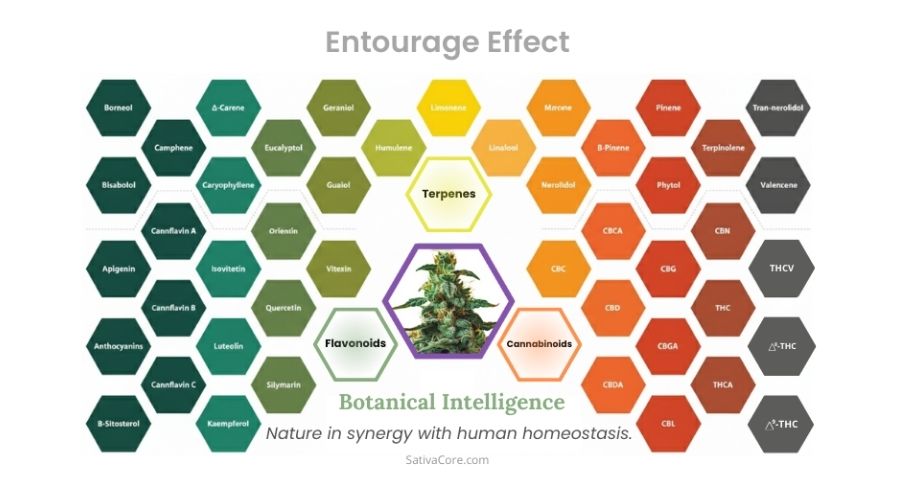
While CBD and THC are the most well-known cannabinoids, Cannabis sativa contains more than 140 identified phytocannabinoids.
When these compounds act together with terpenes and other botanical elements, the so-called entourage effect occurs—a functional interaction in which the whole can be more relevant than the isolated parts.
Despite these advancements, scientific development in this field still moves gradually. Decades of legal restrictions and historical stigmas have limited the pace of research, making the full understanding of these interactions a continuous process.
While science evolves in its own time, the search for quality of life happens in the present. If, on one hand, historical censorship of the study of Cannabis sativa still compromises health and quality of life for many, on the other, its use should not be an act guided by easy promises, artificial urgency, or absolute narratives. We believe in a more responsible path:
It is from this foundation that we have structured SativaCore —connecting science and editorial curation to offer context, criteria, and autonomy across the different pillars that structure human balance:
Body Balance
Functional equilibrium and physical comfort
Restorative Sleep
Rest
and physiological renewal
Stress Balance
Adaptive balance
under stress
Mental Focus
Cognitive clarity
and neural equilibrium
SativaCore’s recommendations are independent and guided by transparent criteria grounded in publicly available research. We partner with brands that share our commitment to transparency, third-party laboratory rigor (COAs), and manufacturing excellence. Below are the partners whose standards align with our pursuit of human balance.
Content may be shared or reproduced provided that the original source is credited with a direct link to sativacore.com